
A little bit of history
ESCCAR
European Society for Coxiella, Chlamydia, Anaplasma and Rickettsia, also including infections caused by Bartonella
.The scientific community currently known under the acronym ESCCAR (European Society for Coxiella, Chlamydia, Anaplasma/Ehrlichia and Rickettsia, also including infections caused by Bartonella) is the result of a long and gradual historical evolution driven by the need for collaboration among researchers working on obligate and facultative intracellular pathogens.
The origins
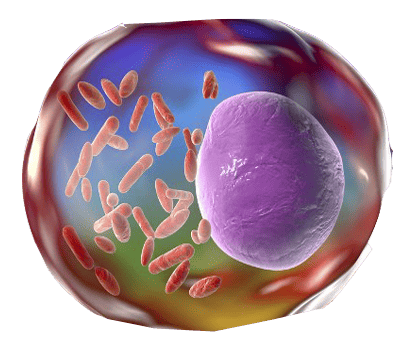
The origins of this community can be traced back to the 1960s, when the exchange of knowledge on rickettsial organisms and related pathogens became increasingly necessary. These microorganisms had played a decisive role throughout human history. It is enough to recall that Rickettsia prowazekii, the causative agent of epidemic typhus, was responsible for the death of millions of people and may have influenced the course of major historical events.
Over the decades, major advances have been achieved in epidemiology, microbiology, pathogenesis, diagnostics, and therapeutics. In particular, the last four decades have witnessed a true revolution driven by genetic and genomic tools, profoundly reshaping taxonomy, expanding the number of recognized genera and species, and transforming our understanding of intracellular bacteria developments that go far beyond the scope of this historical overview.
What this history aims to highlight above all is the people: researchers from different disciplines who shared a common curiosity and a strong commitment to exchanging knowledge and fostering collaboration.
Historical Overview of the Conferences
The first International Conference was organized by Nonna Kordová and held in 1967 in Smolenice, in what is now Slovakia. The second (1976) and third (1984) conferences were also held there, followed by the fourth (1990) and fifth conferences (1996), organized by Jan Kazar in different locations in Slovakia.
In 1999, Didier Raoult organized the 6th International Conference in Marseille (France). The 7th Conference, held in 2002 and organized by Tatjana Avšič-Županc, marked an important turning point: during this meeting, it was decided to abandon the former name EUWOG (European Union Working Group on Coxiella burnetii and Q fever) and to adopt the nomenclature aligned with the European Society of Clinical Microbiology and Infectious Diseases (ESCMID), becoming the ESCMID Study Group on Coxiella, Anaplasma and Rickettsia (ESCAR).
Under this designation, José A. Oteo organized the 8th Conference in 2005 in Logroño (Spain). It is worth emphasizing that many of these conferences were held jointly with the American Society for Rickettsiology (ASR), with which there has been a close and fruitful collaboration.
The 9th Conference was organized by Philippe Brouqui in Marseille (2008), followed by the 10th Conference organized by Achilles Gikas in Heraklion, Greece (2011).
In 2015, reflecting an expanded scientific scope that included a broader range of intracellular pathogens, Gilbert Greub organized the 11th Conference in Lausanne (Switzerland), officially adopting the acronym ESCCAR. The 12th Conference was subsequently organized by Pierre-Edouard Fournier in Marseille.
After a hiatus caused by the profound impact of the COVID-19 pandemic, international meetings resumed in 2022, when Gilbert Greub once again hosted the conference in Lausanne.

The tradition continues, and in June 2026, under the auspices of ESCCAR and in close collaboration with the ASR, Arantza Portillo will organize the 14th International Conference on Rickettsiae and Intracellular Pathogens (ICRIP) in Logroño (Spain).
As in its origins, the future of this scientific community will continue to rely on the shared curiosity, collaboration and commitment of researchers dedicated to understanding intracellular pathogens and their role in health.